Did you know that the 2021 boating season showed a 40% rise in urgent waterfront repairs after heavy rains? That spike made it clear you need a plan for your structure now.
Your shoreline can face rot, loose boards, and fastening failure from constant sun and salt exposure. If you act early, you cut repair time and keep your boat access safe.
Regular checks save money. Inspect pilings, hardware, and floatation each season. Simple maintenance often prevents major structural work later.
Key Takeaways
- Inspect your structure every season to spot wear early.
- Address loose boards and corroded fasteners quickly to protect your investment.
- Small repairs often prevent long, costly restoration work.
- Salt, sun, and storms are the main causes of damage near the water.
- Plan routine maintenance to keep boat access safe and reliable.
Understanding Common Dock Problems in Florida and How to Fix Them
Start with a close look at every beam and fastener—small signs often point to larger needs.
Perform a thorough evaluation of your dock setup. Walk around and note loose boards, corroded metal, soft pilings, and wobbly handrails.
Many boaters found their hardware needed replacement after the 2021 season. That spike proves routine checks save time and money.
When you assess your dock needs, decide if you handle simple fixes or hire a pro for complex repair. Safety matters if load-bearing parts are involved.
- Inspect joints, fasteners, and flotation first.
- Replace worn components promptly to avoid bigger repairs.
- Source quality parts—Tommy Docks offers stationary packages and components for seasonal dock needs.
Addressing small issues now keeps your structure stable and ready for each boat trip.
Identifying Early Warning Signs of Structural Decay
Spotting small faults now keeps your waterfront structure usable for years. Look for clear visual cues and note any changes after storms or heavy use.
Visual indicators of stress
Check surface boards for soft spots, spongy areas, or splits. Uneven walking surfaces and loose fasteners show where the structure needs attention.
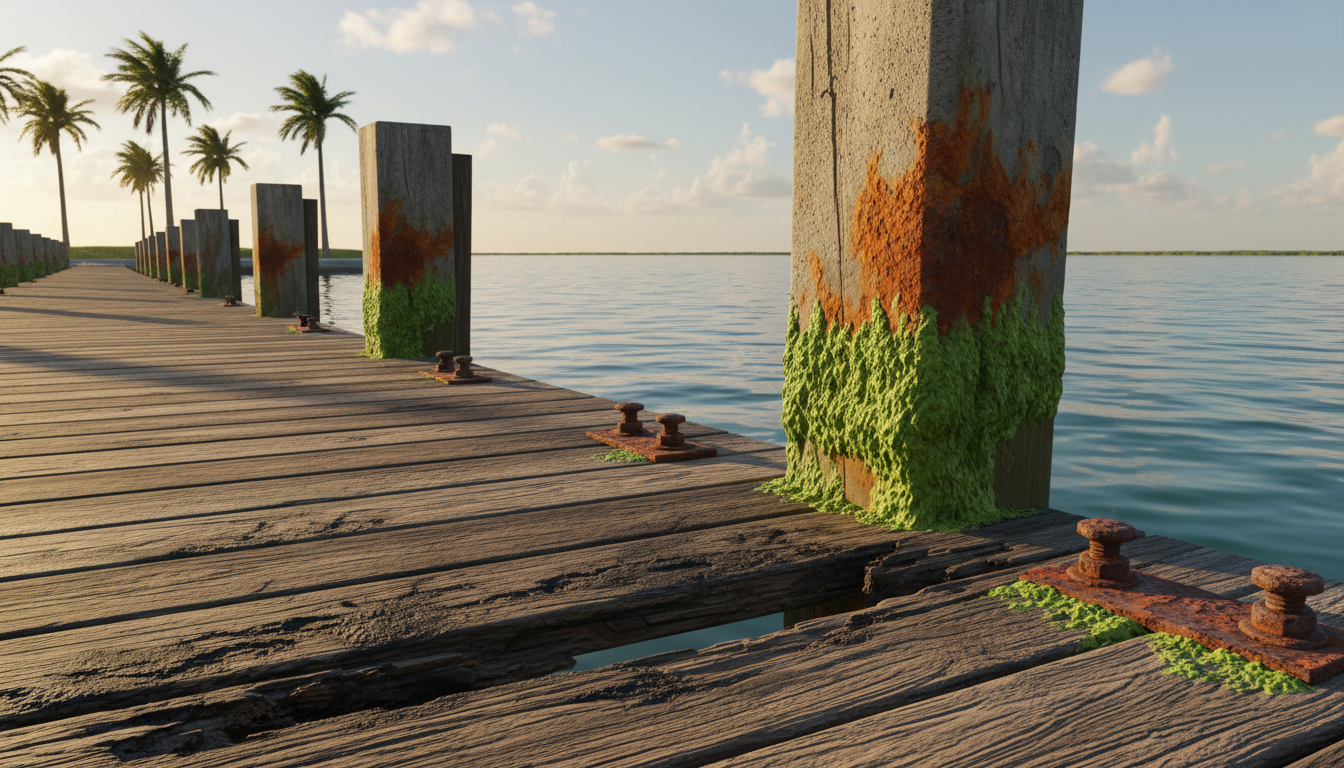
Watch pilings for leaning or cracks. Worn edges on boards often signal deeper wood decay that can lead to costly repairs.
Environmental factors
High humidity and constant water exposure speed rot and fungal growth. Sun and salt worsen wear and reduce structural integrity.
Regular maintenance from a careful owner limits damage. Small repairs now lower the chance of full failure later.
“Ignore early warning signs and you risk total structural failure of your waterfront property.” — Karina Lake & Pond Services
| Visible Sign | Likely Cause | Recommended Action |
|---|---|---|
| Spongy boards | Wood rot | Replace boards; treat adjacent areas |
| Leaning pilings | Erosion or impact | Inspect piling; reinforce or reset |
| Uneven surface | Loose fasteners | Tighten or replace hardware |
Replacing Damaged Deck Boards and Surface Materials
When a section of your decking shows wear, a matching replacement restores strength fast. Replacing a damaged deck board is a straightforward repair that boosts safety and the look of your surface.
If your existing dock has loose or warped boards, prioritize swapping those pieces before the issue spreads. You can buy a replacement boat dock panel that matches nearby materials so the work blends in.
Use quality materials and compatible fasteners. High-grade deck board replacements last longer and keep the surface stable for every boat trip and storage need.
- Measure the damaged area and order matching panels for a seamless fit.
- Remove old boards, check the frame, then fasten new boards with appropriate hardware.
- Inspect fasteners regularly so each board remains secure and ready for use.
“A timely board swap often saves you a full rebuild later.”
Managing Wood Rot and Fungal Growth
A tight seal stops most moisture-driven decay before it can spread through beams. Your waterfront structure faces steady wet-dry cycles that invite rot and algae growth.
Start by inspecting for soft spots, dark streaks, or flaky material. Those are early signs that wood needs attention.
Applying marine-grade sealants
Use a high-quality marine-grade sealant to lock out moisture. These products bond to wood and slow fungal attack for years.
- Routine maintenance: Seal every 1–3 years depending on exposure and product specs.
- Targeted repair: Remove soft sections and replace damaged materials before sealing.
- Algae control: Scrub algae away, then let surfaces dry fully before applying sealant.
If you spot rot, act quickly. Prompt repair stops spread and reduces overall repair time.
“Applying marine-grade sealants is a vital maintenance step that protects your dock materials from the damaging effects of rot and algae.”
Addressing Rusted Hardware and Metal Components
Swapping old bolts for stainless parts is one of the fastest upgrades you can do.
Rusted metal brackets, screws, and connectors can undermine the whole structure. You should inspect every metal connection so no board or support brace fails without warning.
Choose marine-grade stainless steel or hot-dipped galvanized replacements. These materials resist corrosion in salt and fresh water and cut down on electrochemical reactions that eat fasteners.
Replacing hardware is often simple DIY work. Tighten or swap out brackets, lag bolts, and washers during routine checks. That small effort boosts safety and extends the life of your boards.
- Prioritize corroded connectors near high-stress points.
- Match stainless grade (316) for saltwater exposure.
- Record the parts and dates for future inspections.
| Issue | Material Fix | Expected Benefit |
|---|---|---|
| Rusted brackets | 316 stainless steel | Reduced corrosion; longer service life |
| Corroded screws | Hot-dipped galvanized or stainless | Improved hold; fewer replacements |
| Mixed metals | Use isolating washers and same-metal parts | Prevents galvanic corrosion |
Repairing Cracked or Split Pilings
Small splits in a piling often lead to big stability issues if you wait. Your dock surface depends on solid pilings. Inspect each one for splits, loose sections, or decay before seasonal changes.
Freeze-thaw cycle damage
Freeze-thaw cycles force water into tiny cracks. When that water freezes, it expands and widens the split. Over years this accelerates damage and undermines the piling’s load capacity.
Reinforcement techniques
Reinforcing a cracked piling can save you from a full replacement. Common options include bolted sister piles, bracing with treated lumber, or filling cracks with epoxy-infused compounds for added strength.
These repairs reduce movement and extend the life of the piling while you plan longer-term repair or replacement.
Piling sleeve benefits
Marine-treated wood and PVC piling sleeves add a protective layer that resists marine organisms and abrasion. A sleeve locks around the piling and shields the materials beneath.
- Inspect for splitting often; pilings are the foundation of your dock.
- Sleeves and reinforcements are cost-effective alternatives to full replacement.
- Proper maintenance keeps your surface level and safe for boat use for years.
Fixing Shifting or Sinking Dock Platforms
You can often stop a sinking platform before it needs a full replacement with prompt maintenance.
Shoreline erosion or missed weather factors at installation usually cause a platform to move or sink. Pay attention to the water level and anchor points first.
If the surface sits low, check flotation devices and attachments. Replacing or servicing worn floats often lifts the platform and stops further damage.
Secure anchor lines and pile connections so the platform stays level during heavy wind or wakes. Small corrections now preserve structural integrity and improve safety.
- Inspect after storms and seasonal changes.
- Service flotation units if one side rides lower than the other.
- Tighten or reset anchors when movement appears.
| Issue | Likely Cause | Quick Action |
|---|---|---|
| Platform leans | Uneven flotation or anchor shift | Adjust floats; retension anchors |
| Sinking end | Failed float or waterlogged foam | Replace float; check fasteners |
| Slow movement | Shoreline erosion | Reinforce shore anchors; consult pros |
“Early attention to level and anchors prevents larger repairs.”
Upgrading Boat Dock Bumpers for Better Protection
A solid bumper system keeps your vessel safe during every landing. Bumpers act as fenders that stop gashes or holes when your boat meets the stationary structure.
Upgrading your bumpers is an easy repair that pays off fast. Replace any bumper with visible cracks or dents. Those marks mean the material no longer cushions impacts well.
Choose high-quality bumpers to protect both your hull and dock hardware. Durable rubber or heavy-duty foam lasts through sun, salt, and wakes. That lowers the chance of costly hull work later.
Most owners can handle this upgrade themselves. Mounting new bumpers usually needs basic tools and a short how-to. Do the job before peak season so your boat stays safe during busy weekends.
- Swap bumpers with visible wear right away.
- Pick UV- and salt-resistant materials for longer life.
- Check mounts and fasteners when you install new fenders.
The Importance of Regular Professional Inspections
An outside assessment often finds subtle signs that most owners miss. A professional assessment each year covers overall integrity, pilings, hardware, and the surface against water wear.
Karina Lake & Pond Services recommends an annual professional assessment to catch hidden issues before they need costly repairs. You gain a clear list of items that need attention.
A trained inspector notes safety concerns and material wear that you might not see. The report helps you plan maintenance and schedule repair work across years.
As a dock owner, you get peace of mind when someone checks anchor points, piling alignment, and fasteners. Early discovery keeps your waterfront structure usable and safer.
“Annual professional assessments protect your investment and prevent surprise failures.”
- Professional assessments catch hard-to-find signs before they worsen.
- Inspections create a timeline for maintenance and future repair.
- Every dock owner should prioritize these checks for long-term integrity.
When to Choose Full Replacement Over Repairs
When repairs outnumber good sections, a full replacement often makes more sense. You save time and avoid repeated work when too many parts fail.
If several load points show major damage, or many support pieces need swapping, repair becomes costly. Pay special attention if the pilings or piling bases are compromised.
- If more than a few structural sections fail, replacement is usually cheaper long term.
- Severely rotted pilings or shifting footings often mean a new structure is the safest choice.
- Widespread surface decay and recurring repairs signal that piecemeal fixes won’t last.
- A new package for your dock can be user-friendly and cut future maintenance needs.
Evaluate the extent of damage honestly. If many sections of your existing dock show failure, a full replacement protects your waterfront investment and your boat access for years.
Essential Tools for Your Dock Maintenance Kit
A compact, well-stocked toolkit lets you handle small repairs before they grow.
Start with basics: a set of wrenches, screwdrivers, a cordless drill, and a good tape measure. These let you tighten brackets and swap stripped fasteners in minutes.
Keep marine-grade hardware, spare boards, and a supply of sealant and screws. Tommy Docks offers parts and brackets that match common dock needs, which saves time when you repair a worn section.
Include a small hammer, rust-resistant replacement parts, and PVC gloves. Storing basic materials means you can address minor surface wear before it spreads.
- Keep a labeled box so you find tools during quick work.
- Use quality gear—investing once saves repeat purchases later.
- As a owner, regular use of this kit keeps your wooden elements and wood supports in better shape.
“A ready kit reduces downtime and keeps routine maintenance simple.”
Conclusion
, Protecting your waterfront starts with quick attention to early wear. Keep checks simple and frequent so you catch issues before they grow.
Your focus on safety pays off. Regular attention keeps family access reliable and reduces surprise costs.
Address small signs in wood, swap loose boards, and tend the surface with timely repair. These steps preserve the whole structure and extend its useful life.
Whether you handle work yourself or call a pro, staying proactive is the key. Start your routine today and enjoy a safer, worry-free boating season.
FAQ
What are the first signs that your dock’s structural integrity is failing?
Look for sagging sections, uneven walking surfaces, loose or missing fasteners, and visible rot on deck boards or pilings. You might notice a boat rubbing where it didn’t before or hear creaks when you walk. These indicators suggest you should inspect brackets, hardware, and pilings right away.
How do you tell if deck boards need replacement rather than simple repair?
Press on suspect boards—if they give and show deep soft spots, hairline cracks that widen, or more than two fasteners are loose, replacement is safer. Surface wear, splintering, and chronic algae buildup also point to replacement, especially when the substructure shows age-related wear.
What’s the best way to treat wood rot and fungal growth on waterfront structures?
Remove badly decayed wood and treat surrounding areas with a marine-grade wood preservative. After drying, apply a quality sealant or stain formulated for salt or brackish water. Regular cleaning with a mild bleach solution controls algae and slows rot.
Which metal fasteners should you use to resist corrosion near saltwater?
Use 316 stainless steel or hot-dipped galvanized hardware for long life. Bronze fittings also work well. Avoid plain carbon steel near saltwater because it rusts quickly and weakens connections between boards, brackets, and pilings.
How can you repair cracked or split pilings without full replacement?
Small splits can be reinforced with piling sleeves, epoxy wraps, or stainless steel bands. For larger damage, install a concrete collar or fiberglass sleeve to restore load capacity. Always check for undermining at the waterline before choosing a technique.
What causes pilings to shift or a platform to sink, and how do you fix it?
Scouring, soft bottom soils, or broken pile connections cause movement. Stabilize by driving new piles, adding helical anchors, or underpinning existing supports with concrete collars. Correcting boat loads and re-leveling the platform prevents recurrence.
When should you upgrade bumpers and fenders for boat protection?
Replace worn or flattened bumpers that leave gaps or allow hull contact. Use UV-resistant, marine-grade fenders sized for your boat and mount them at the correct height. Replacing old fasteners and brackets at the same time improves security.
How often should you schedule professional inspections for your waterfront structure?
Have a certified marine inspector or structural contractor evaluate your dock every 2–3 years, or sooner after storms and hurricanes. Inspections catch hidden decay in pilings, corrosion in metal components, and weakened connections before failure.
What signs indicate it’s time for full replacement instead of piecemeal repairs?
Consider full replacement if multiple pilings show severe rot, the substructure has widespread decay, corrosion affects primary load paths, or repeated repairs fail within short periods. A professional assessment of structural integrity will help you decide.
What basic tools and materials belong in a dock maintenance kit?
Keep a pry bar, cordless drill, stainless steel screws, replacement deck boards, marine-grade sealant, a moisture meter, wire brush, and personal flotation device. Include spare brackets, fender straps, and a small anchoring kit for quick fixes.
Can you prevent algae and slippery surfaces without harsh chemicals?
Yes. Regular brushing, pressure rinsing with fresh water, and applying non-toxic anti-slip coatings help. Use biodegradable cleaners designed for marine use to prevent harming aquatic life while reducing slips and wear on boards.
How do environmental factors accelerate wear on waterfront structures?
Salt, sun, tides, and marine borers degrade wood and metal faster. UV breaks down coatings, salt speeds corrosion, and tidal movement exposes different parts of pilings to wetting and drying cycles. Plan maintenance with these stresses in mind.
What reinforcement techniques improve a piling’s longevity?
Options include fiberglass or steel sleeves, concrete collars, epoxy injection for cracks, and stainless steel banding. Combining a sleeve with a sacrificial timber or predator wrap can extend service life while you plan a longer-term solution.
Are composite boards worth the investment for board replacement?
Composite boards resist rot, insect damage, and splintering and need less frequent sealing than wood. They cost more upfront but lower long‑term maintenance. Choose UV‑stabilized, marine-grade composite with stainless fasteners for best results.
What safety steps should you take before attempting any repairs?
Wear a life jacket, use nonslip footwear, and secure tools to prevent drops. Check weather and tides, shut off nearby boat engines, and work with a partner when possible. For structural work on pilings or load-bearing members, hire a pro to avoid accidents.