Surprising fact: more than 40% of seasonal downtime for vessels traces back to neglected hoist systems, leaving owners stranded on warm weekends.
You rely on your lift to keep your vessel ready for the water. With over 30 years of experience, Bill Golden knows that even the best systems fail without steady care.
This short guide gives clear, practical maintenance tips that extend gear life and cut unexpected fixes. Simple checks done each season save time and money, and boost your boating enjoyment.
Keep it routine: inspect moving parts, address corrosion early, and note odd noises. When your lift is properly maintained, you avoid most common pitfalls that lead to expensive downtime during peak months.
Key Takeaways
- Routine checks stop small issues from becoming big problems.
- Simple seasonal care extends the life of lifts and motors.
- Bill Golden’s three decades of experience support practical steps.
- Early corrosion and noise checks reduce unexpected downtime.
- Follow clear maintenance tips to protect your investment.
Why Regular Care is Essential for Your Boat Lift
Neglect lets salt, algae, and moisture quietly weaken critical metal parts. Marine exposure speeds wear on moving parts and leaves you with surprise damage right when you need the system most.
The EPA notes freshwater sites get more algae and sediment in warm months, which clogs pulleys and hides early signs of trouble.
Saltwater adds another threat. Belmont Metals highlights sacrificial zinc anodes as a key defense against galvanic corrosion on metal components.
Regular maintenance keeps small issues small. Watch for moisture buildup, minor rust spots, and odd noises. These clues warn you before structural problems spread.
“Consistent attention ensures reliable, safe service every boating season.”
- Check metal for rust and secure zinc anodes.
- Clear algae and sediment regularly.
- Address moisture and loose fittings right away.
Give your lift steady care and it will serve for many seasons, saving you time and expense in the long run.
Seasonal Maintenance Tasks to Prevent Costly Repairs
A clear schedule of cleaning, cable checks, and winter steps saves time and hassle.
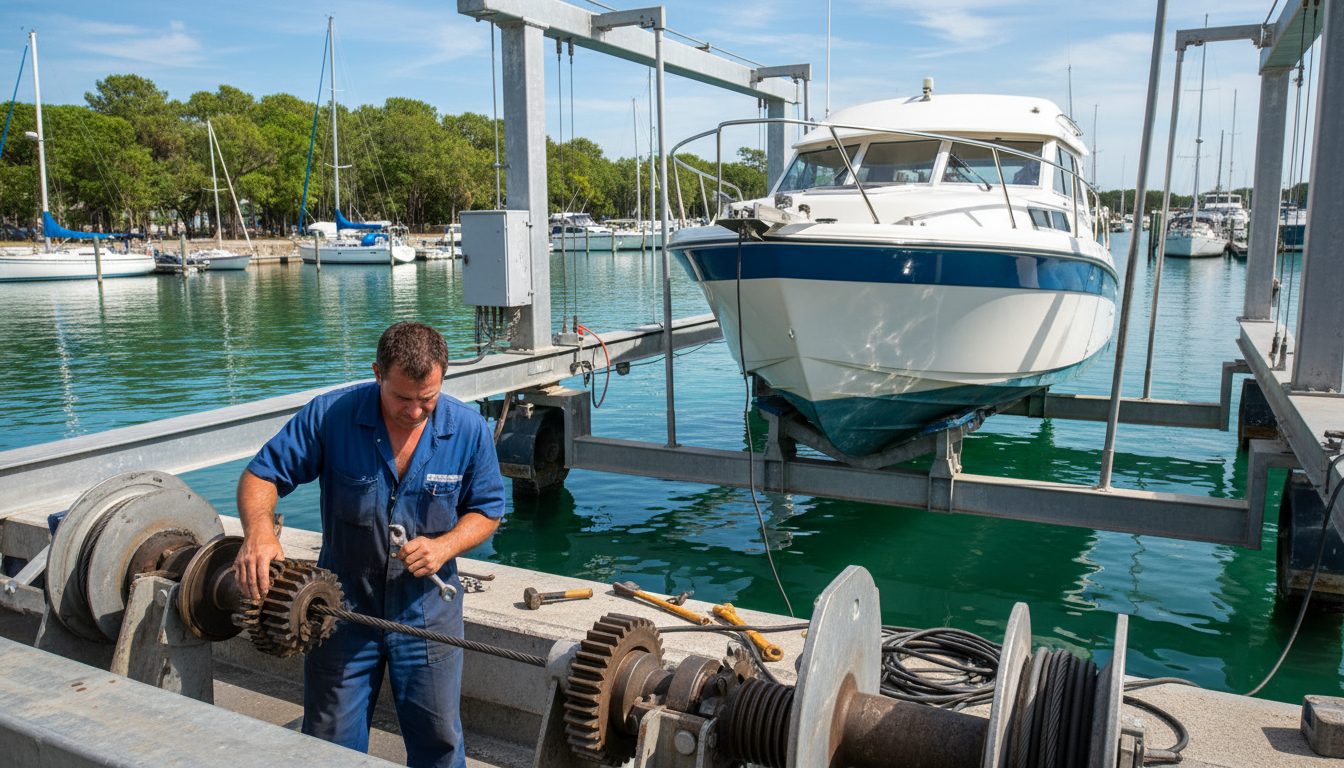
Cleaning and Lubricating Moving Parts
Clean moving parts with mild soap and water to remove debris and algae buildup.
Dry parts, then apply marine-grade grease on sprockets and pulleys to guard against rust and corrosion.
Tip: Use penetrating oil on cables instead of heavy grease where manufacturer guidance recommends it.
Servicing Lift Cables
Inspect cables for fraying, kinks, or rust during each seasonal inspection.
Replace cables every 2 years or after 200 full lifting cycles, whichever comes first, for safety.
Follow safety steps and manufacturer guidelines; experienced DIYers can handle some tasks with care, as noted by The Hull Truth (2020).
Winterizing Your System
Raise the lift fully out of the water and cover the motor to shield it from moisture and freezing conditions.
Store or shield exposed metal components and zinc anodes to limit saltwater and salt corrosion.
| Task | Frequency | Why it matters |
|---|---|---|
| Clean moving parts | Seasonal | Removes debris, reduces wear, prevents pulleys buildup |
| Inspect/replace cables | Every 2 years or 200 cycles | Prevents fraying failure and safety hazards |
| Winterize motor & components | Annually before freeze | Protects motor from moisture and salt damage |
Identifying Warning Signs of Wear and Damage
Small sounds and slight movement changes often point to bigger mechanical issues. Spotting these early saves you time and keeps your system reliable.
Recognizing Unusual Noises and Mechanical Issues
Unusual noises like grinding or squealing usually mean misaligned pulleys or debris in the drive. Listen during every cycle; these are the first signs that something needs attention.
Check cables for fraying and metal parts for rust. If the lift raises unevenly, the motor may be strained or hydraulics may have air trapped in the lines.
- Inspect fasteners and structural parts after heavy exposure; bolts can loosen over time.
- Watch for hissing or gurgling sounds—these often point to hydraulic line issues.
- Regular inspections spot wear, corrosion, and debris before they cause real damage.
Safety matters: stop operation if you hear odd noises or see uneven movement. Then schedule professional service for any major motor, cable, or hydraulic concerns.
Balancing DIY Maintenance with Professional Service
A practical plan lets you handle routine tasks while leaving complex diagnostics to trained technicians.
You can tighten loose bolts, clear debris from pulleys, and check zinc anodes during seasonal care. Always disconnect power at the motor before starting any work for your personal safety.
Safety Precautions for DIY Repairs
Never work beneath a raised lift without stable support stands. That rule protects you from sudden drops and structural failure.
Use gloves, eye protection, and follow the manufacturer’s steps when handling cables or metal parts. If you smell burning or hear unusual noises, stop and assess the situation.
When to Call a Certified Technician
Call professional service for electrical faults, hydraulic leaks, persistent odd sounds, or if structural corrosion appears on load-bearing components.
| Task | DIY | Professional |
|---|---|---|
| Tightening bolts & basic cleaning | Yes | Optional inspection |
| Cable replacement or major wear | No — risk | Yes — certified tech |
| Electrical, hydraulic, heavy corrosion | No | Yes — required |
“Balance simple care with expert checks to keep your boat lift reliable and safe.”
Conclusion: Protecting Your Investment for the Long Term
,Small, regular checks stop minor wear from turning into big damage during peak boating months.
Give your boat lift seasonal attention: inspect cables, clear debris, and watch for unusual noises or signs of corrosion. Keep metal components greased where recommended and cover the motor when not in use.
Routine inspections save time and money over the long run. When you spot fraying, rust, or buildup on pulleys and parts, act quickly or call a certified tech for safety.
With steady care and timely action, your lift will stay reliable and your boat ready for the water each season.
FAQ
Why is regular care essential for your boat lift?
Regular care keeps moving parts working smoothly, reduces corrosion in metal components, and extends the life of cables, pulleys, and the motor. Routine checks catch small problems—fraying, rust, or loose bolts—before they become expensive repairs.
What cleaning and lubrication tasks should you do each season?
Rinse salt and debris from metal surfaces, remove algae and buildup, and spray freshwater on areas exposed to saltwater. Lubricate pulleys, hinges, and winches with marine-grade grease or lubricant. Wipe away excess to prevent grime that attracts moisture and accelerates wear.
How often should lift cables be serviced or replaced?
Inspect cables monthly during the boating season for fraying, kinks, rust, or broken strands. Replace them immediately if you see any damage. Even without visible damage, consider replacement every 5–10 years depending on use and exposure to saltwater.
What steps are involved in winterizing your system?
Remove the boat if possible, raise the lift off the water, disconnect and store batteries, and protect the motor with a cover. Lubricate moving parts, drain any gearbox fluid if applicable, and secure the structure against ice and storms.
What warning signs indicate wear or impending failure?
Watch for unusual noises from the motor or pulleys, slow or jerky operation, visible rust, loose fasteners, and electrical issues like tripping breakers. Frayed cables, bent components, and wobbling platforms mean you should act immediately.
How can you recognize unusual noises and mechanical issues?
Grinding, squealing, or clunking often points to worn bearings, lack of lubrication, or misaligned pulleys. Humming with reduced lift speed can indicate motor strain. Stop use and inspect if sounds are new or getting worse.
What safety precautions should you follow for DIY repairs?
Always disconnect power and secure the lift before working on it. Use proper personal protective equipment, support the boat and platform with blocks or stands, and follow the manufacturer’s manual. Never work under an unsupported load.
When should you call a certified technician?
Call a pro for electrical faults, major motor or gearbox issues, structural damage, or when you’re unsure about cable replacement or alignment. Certified technicians can diagnose complex problems and ensure safe, code-compliant repairs.
How does environment affect maintenance frequency?
Saltwater, humidity, and algae-prone lakes increase corrosion and wear, so you’ll need more frequent rinsing, inspections, and lubrication. Freshwater systems require less aggressive care but still need routine checks to prevent surprises.
What daily or weekly checks help prevent costly repairs?
Run a quick visual inspection for loose bolts, cable condition, debris in pulleys, and unusual operation sounds. Test the lift under light load periodically and clean off salt or grime after each use when possible.
Which parts wear out fastest and need the most attention?
Cables, pulleys, bearings, switches, and the motor are high-wear items. Check these components more often, especially if you hear noise, notice reduced performance, or see corrosion starting.
Are there specific lubricants or cleaners you should use?
Use marine-grade grease for gears and stainless-safe lubricants for cables and pulleys. Avoid household oils that attract dirt. For cleaning, freshwater rinse and mild marine cleaners work best; avoid harsh acids that damage metal and finishes.
How can regular maintenance save you money over time?
Small fixes like tightening bolts, replacing a frayed cable, or lubricating moving parts prevent failures that can damage your boat or require replacing motors and structural components. Regular care lowers the chance of emergency repairs and extends equipment life.
What records should you keep for maintenance?
Log inspection dates, repairs, part replacements, and service calls. Include notes about operating hours, environmental exposure, and any unusual operation. Records help you spot trends and prove proper upkeep if you sell or file a warranty claim.