Surprising fact: nearly 60% of lake owners underestimate total onboard mass, which leads to early wear and unsafe setups.
You want clear guidance to protect your vessel at Lake of the Ozarks. This short guide gives practical steps to pick the right lift capacity and lift size.
Start by adding dry weight, fuel, gear, and accessories so the final figure reflects real conditions. Relying on hull numbers alone is a common mistake.
We cover differences between pontoons and wake boats, explain how waterfront conditions affect choices, and show how a correct selection saves time and money over years.
Keep safety and long-term protection in mind when you choose right. The right capacity prevents premature wear and gives you peace of mind on the water.
Key Takeaways
- Always total dry weight plus fuel, gear, and accessories.
- Pick capacity above your calculated total for safety margin.
- Different hull types need different support and placement.
- Water conditions and dock setup influence the correct choice.
- A proper selection reduces repair costs and extends life.
Why Getting Your Boat Lift Size Right Matters
Right sizing the support system protects your vessel and saves you money over time.
An undersized boat lift causes early wear, instability, and costly repairs at Lake of the Ozarks. Gear, fuel, and passenger loads add to total weight, so a margin above that total keeps things stable.
Choose capacity with a buffer to reduce mechanical strain and extend service life. Proper capacity lowers stress on cables, motors, and brackets.
When you prioritize correct lift capacity, you protect the hull from uneven support and reduce the chance of structural damage. That helps avoid motor or trim issues caused by sagging or misalignment.
| Condition | Risk | Recommended Action |
|---|---|---|
| Undersized system | Instability; early wear; expensive repairs | Upgrade to higher rated lifts |
| Exact match | Acceptable short-term; limited margin | Add 10–20% buffer if possible |
| Higher capacity | Improved stability; longer lifespan | Choose robust mounts and routine checks |
Understanding What Size Boat Lift Do I Need for My Boat Weight and Type
A correct rating keeps your hull level, your cables healthy, and your weekends stress-free.
The Importance of Weight Ratings
Lift capacity is the maximum safe load the system handles, including fuel, batteries, gear, and accessories. Always count those extras when you total your numbers.
Relying on dry weight alone is a common error. That missing cargo adds real pounds and raises risk.
Avoiding Common Sizing Mistakes
Give yourself a safety buffer. A 20–30% margin improves stability and extends service life, especially for pontoons and heavier craft.
Proper hull alignment and balanced support prevent warping, stress cracks, and uneven wear. Check width and motor placement so the platform supports the hull where it needs it.
- Check the rated capacity against your loaded total.
- Consult an expert to match mounts and dock needs.
- Choose a properly sized system that fits beam and motor weight.
Choosing right means using accurate information and planning for real conditions. That choice protects the hull, reduces damage risk, and keeps maintenance low.
Calculating Your Total Vessel Weight
A quick total of fuel, gear, and equipment reveals the true load your dock system will face.
Accounting for Fuel and Gear
Start with the dry weight of your new boat. For example, the 2013 Chaparral H2O 19 SPORT lists a dry weight of 2,540 lbs and holds 30 gallons of fuel.
Gasoline adds about 6–7 lbs per gallon. A full 30-gallon tank adds roughly 180–210 lbs. Livewell water adds about 8 lbs per gallon, so include that too.
Don’t forget extra equipment: wake towers, batteries, coolers, and extra seating increase the total. Missing these can push a system past its rated capacity and risk cable failure.
| Item | Example Amount | Approximate Weight |
|---|---|---|
| Dry weight (Chaparral H2O 19) | — | 2,540 lbs |
| Fuel (gasoline) | 30 gal | 180–210 lbs |
| Livewell water | 10 gal | 80 lbs |
| Gear & accessories | Varies | 100–400 lbs |
After you total everything, add a 10–20% safety margin to select the correct lift capacity. That buffer helps absorb wave shock and prevents structural damage during rough water situations.
Evaluating Boat Hull and Beam Dimensions
Measure your hull carefully; small errors in beam count lead to poor support and long repairs.
Longer and wider hulls need more cradle points. That keeps the structure level and reduces stress.
If you run a tower or bimini, confirm the frame clears hardware. Proper alignment prevents rubbing and hard spots.
Shallow water changes clearances during low tides or seasonal drops. Specialized frames or guides may solve clearance problems.
“Correct bunk placement protects the hull and cuts maintenance bills over time.”
- Measure beam at the widest point to choose correct bunk spacing.
- Match cradle shape to hull contour for even support.
- Account for stern and motor mass when checking capacity.
| Factor | Impact | Recommended Action |
|---|---|---|
| Beam width | Determines bunk span | Measure and pick wider frames |
| Hull shape | Needs contour support | Use adjustable bunks |
| Shallow water | Clearance limits lift travel | Choose low-profile or elevator designs |
Comparing Different Types of Boat Lifts
Different systems match different waterfronts; pick the one that fits your dock and routine.
Conventional Four Post Systems
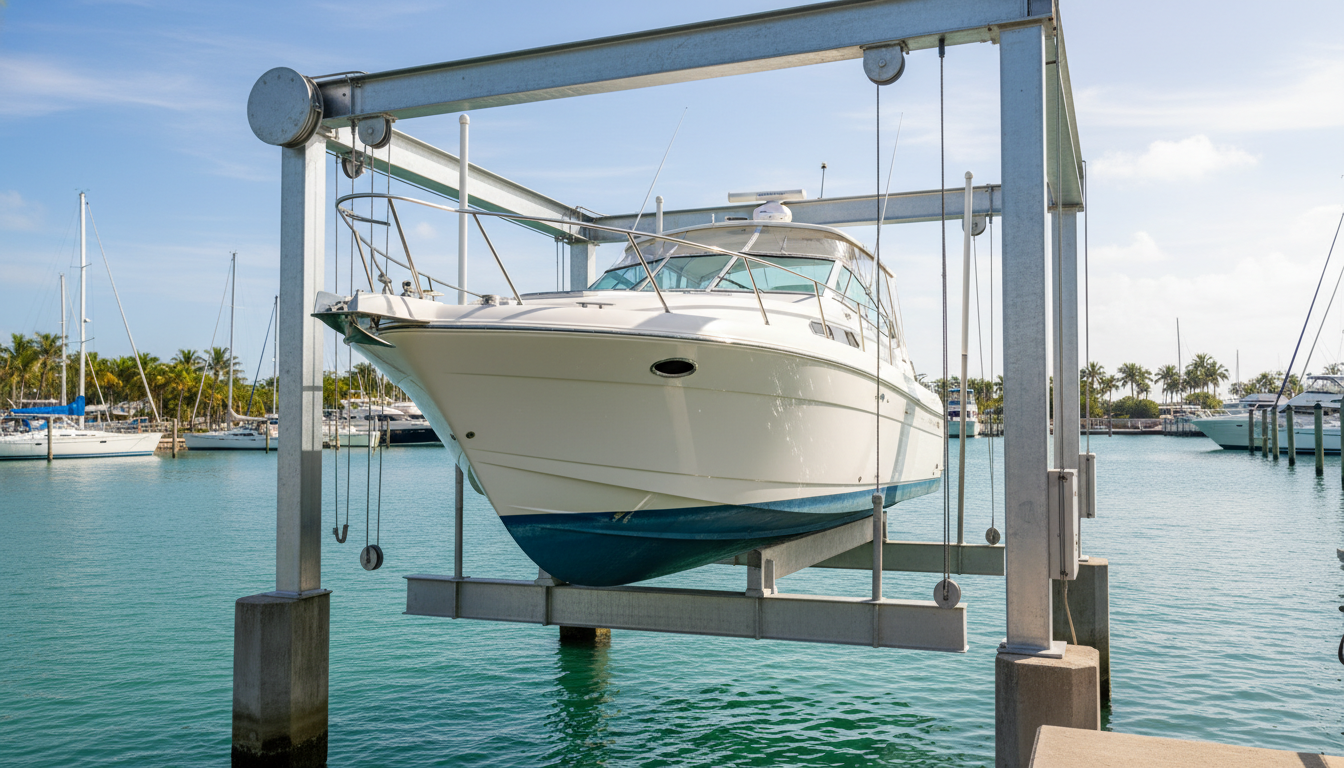
Four-post systems work well for small to medium vessels. The sturdy posts resist strong weather and give steady support.
They offer reliable capacity and simple maintenance. That makes them a common choice when long-term durability matters.
Elevator Lifts for Tight Spaces
Elevator models save waterfront room and keep the deck clear. They suit narrow channels and docks where drilling into the seafloor is limited.
These lifts can be good when width and clearance are tight. Check the rated capacity against your loaded total before buying.
Floating Lift Advantages
Floating systems use large air tanks to lift the hull and adapt to changing water levels automatically.
They perform best in deep water and where water levels fluctuate. That automatic adjustment lowers stress and reduces risk of hull damage.
- Hydraulic versions add speed and energy efficiency when you need quick access.
- Cantilever options remain cost-effective for casual recreational use.
“Match capacity, beam support, and local conditions to protect the hull and keep operations safe.”
The Role of Environmental Factors and Water Conditions
Local waves and shifting water levels can turn a calm mooring into a high-stress scenario fast.
Wind, wake, and storm surge affect how your boat lift performs. Bouncing from waves adds an “effective weight” that can far exceed the static load.
In severe weather, waves may push against the hull and force the system to absorb shocks it was not designed for. That raises the risk of cable failure and hull damage.
Choose a system with extra capacity and features that match your site. Properly sized lifts help keep the hull aligned during fluctuating water levels and reduce mechanical strain.
- Survey typical wave action and wind patterns at your dock.
- Factor seasonal water levels into capacity decisions.
- Add a safety margin to handle shock loads from wakes or storms.
“By matching capacity to local conditions, you protect gear and reduce the chance of failure.”
Essential Accessories for Your Lift Setup
Smart accessories cut routine maintenance and keep weekend launch times short.
Canopies and curtains give broad protection. They shield the hull from sun, rain, and airborne debris. That helps prevent fading and marine growth.
Wireless remotes make operation simple. With a button push you raise or lower the platform. That saves time and keeps your hands free when boarding.
- Canopies reduce cleaning and limit UV damage to finishes.
- Curtains protect the hull down to the waterline and slow staining.
- Ramps bridge height gaps between pier and deck for safer access.
- Remote controls simplify daily use and reduce wear from manual handling.
Talk to a local dealer about which accessories fit your equipment and water conditions. Proper choices protect value, match capacity needs, and keep your motor and hull in better shape over years.
Tip: well-chosen extras pay back through lower cleaning costs and smoother weekends.
Conclusion
A final check of totals and local conditions locks in a safe, long-lasting setup.
Take time to add gear, fuel, batteries, and any extra items to your number. Then pick a capacity that exceeds that total by a healthy margin.
That choice reduces repairs and keeps your hull aligned during waves and changing water. Use this guide to make confident decisions and save time over years.
Finally, consult an expert who knows local docks and regulations before you buy. Their advice seals the right choice and protects your investment.
FAQ
How do I figure the correct lift capacity from my vessel’s dry weight?
Start with the manufacturer’s dry weight on the title or spec sheet. Add fuel, passengers, gear, and options to estimate a safe operational weight. Pick a lift rated at least 20–30% above that total to allow a margin for safety and future upgrades.
Why should I add extra capacity beyond the calculated total weight?
Extra capacity protects hardware and hull from overload, compensates for waterlogged items or full fuel tanks, and reduces motor strain. It also provides flexibility if you add electronics, fishing gear, or heavier motors later on.
How do beam and hull shape affect berth selection?
The beam determines track spacing or cradle width. Flat-bottom and tunnel-hull boats need different support points than deep-V designs. Ensure bunks or lifts align with stringers and hull supports to avoid pressure points and cosmetic damage.
What differences should I expect between four-post, elevator, and floating systems?
Four-post units offer stability and ease of docking for larger vessels. Elevator lifts work well in shallow water and tight slips. Floating systems stay with the boat and can be easier to install, but check capacity and anchoring needs for your conditions.
How do water depth and tides influence the lift choice?
Shallow water rules out deep-slung lifts and favors elevator or floating options. In tidal areas, choose a lift with adjustable heights or longer pilings. Consider seasonal water level swings to keep bunks and engines clear of the bottom.
Should I include equipment weight like engines, batteries, and fuel in the total?
Yes. Count full fuel, outboard(s), batteries, anchors, built-in tanks, and heavy electronics. Those items add substantial pounds and will change your required rating compared to dry weight alone.
How do I pick bunk layout or cradle pads to protect my hull?
Match bunks to hull contours: long bunks for flat bottoms, V-bunks for sharp-keeled boats, and adjustable pads for variable shapes. Use marine-grade carpet or rubber to cushion and distribute load across strong hull areas.
What safety margin do pros recommend for lift capacity?
Most experts recommend a 20–30% safety margin. For frequent heavy loads or commercial use, consider 30% or more. This reduces mechanical wear and keeps your craft safely supported during launch and retrieval.
Can I rely on a lift’s advertised capacity alone?
Use the advertised number as a baseline, but verify installation factors like piling strength, electrical supply, and environmental stresses. Improper mounting or weak pilings can make even a correctly rated unit unsafe.
How do accessories and add-ons affect the lift choice?
Accessories such as electric winches, canopy mounts, boarding ladders, and heavier lifts for twin engines add weight and change center-of-gravity. Factor them into your total and choose hardware rated accordingly.
Is there a difference in maintenance between different lift types?
Yes. Four-post lifts typically require less frequent mechanical checks but need corrosion protection. Elevator lifts have more moving parts and need regular inspection of cables and motors. Floating platforms need hull maintenance and mooring checks.
How do I account for future upgrades when choosing a lift?
Anticipate adding electronics, larger outboards, or hardtops. Choose a lift with extra capacity and adaptable bunks or cradles so you won’t need a replacement after upgrades.
When should I consult a pro installer or marine surveyor?
If your hull has unusual contours, you’re unsure about piling strength, your site has strong currents or ice, or the vessel is large or modified, get a professional assessment. They ensure safe ratings, correct placement, and code compliance.