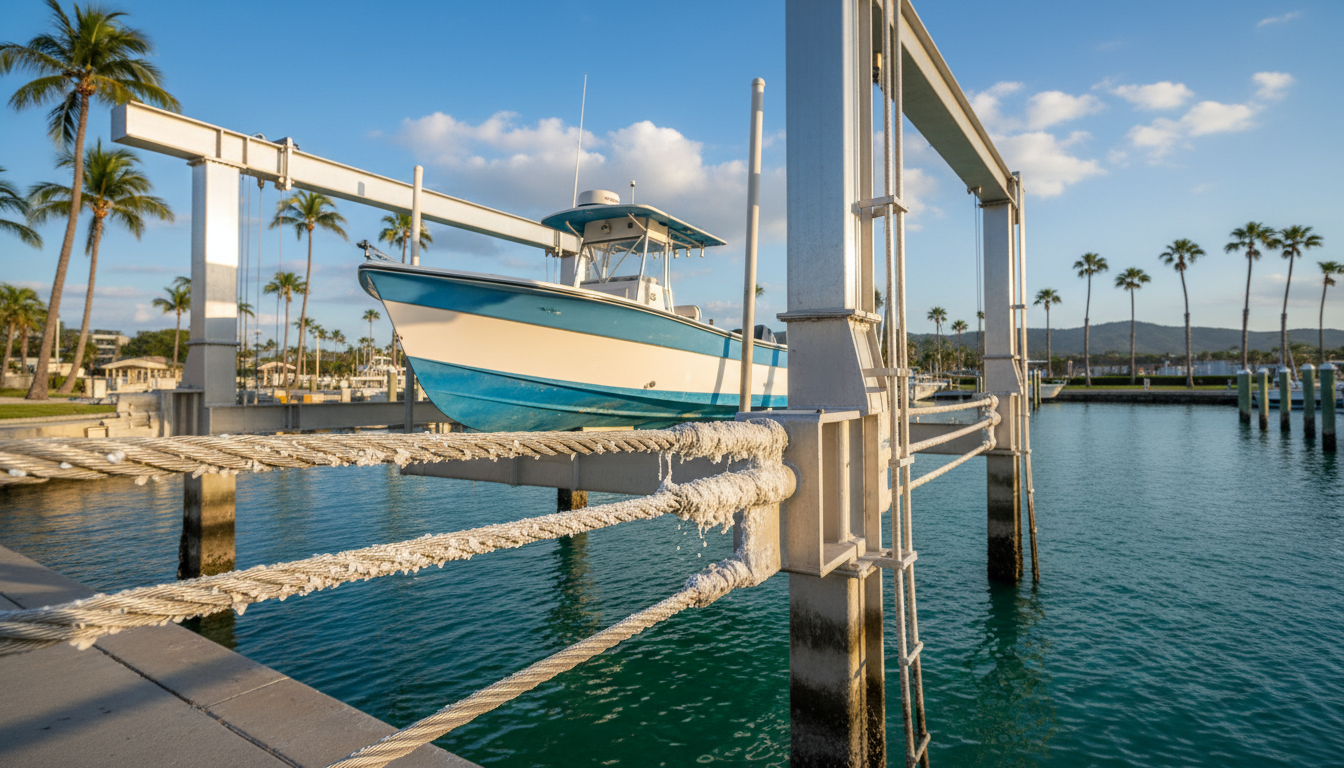
Fact: coastal metal gear can show visible corrosion within just five years without proper care.
You likely installed equipment to protect your watercraft and shore. In places like Stuart, Florida, Hurricane Boat Lifts helps owners spot early signs of wear and plan timely maintenance.
Salt air speeds up corrosion on exposed components, but modern lifts are built tougher than older models. Regular checks and prompt repairs keep systems reliable and extend overall longevity.
If you want to protect your investment, work with local professionals who understand coastal exposure and can tailor solutions for your dock and watercraft.
Key Takeaways
- Coastal corrosion can appear within years without upkeep.
- Material quality and exposure determine real lifespan.
- Routine maintenance prevents small issues from becoming major damage.
- Local pros in Stuart offer tailored installation and advice.
- Early detection of signs saves time and repair costs.
Understanding How Long Does a Boat Lift Last in Saltwater Conditions
Proper sizing and smart operation are the quickest ways to avoid premature structural damage. Confirm the unit’s design matches your watercraft weight and planned use before installation.
Many owners cause early damage by overloading or by leaving the plug in while docking. Those actions change weight distribution and add stress to key components.
Know local dock conditions and set the correct depth at installation. Small misalignments or wrong depth will shorten the equipment’s useful life and create operational issues.
- Verify rated weight and test operation under no-load and full-load scenarios.
- Train anyone who will operate the unit to avoid common mistakes.
- Call a pro if you spot odd noises, binding, or uneven movement.
“Routine checks and timely maintenance turn small fixes into big savings.”
The Role of Construction Materials in Longevity
Durable construction starts with smart material selection and trusted finishing methods. Your choice of metals and coatings has the biggest impact on longevity and safety for dock equipment.
Aluminum and Steel Alloys
Aluminum is popular because it forms a thin oxide layer that helps resist corrosion. Many boat lift designs use aluminum or stainless steel alloys to boost durability and reduce weight.
Gulf Stream also uses high-density polyethylene (HDPE) on structural parts. That material prevents degradation and supports a 20-year limited warranty when you follow care guidelines.
Protective Coatings and Anodes
Sacrificial anodes made from zinc or aluminum help divert galvanic corrosion away from critical components. Galvanization applies a zinc layer to steel for extra defense against saltwater exposure.
Protective epoxy coatings add another barrier and lower the need for frequent repairs. Investing in quality metals and finishes is the best design choice to extend useful life and preserve safety.
“Routine checks and timely maintenance turn small fixes into big savings.”
Environmental Factors That Impact Your Equipment
Strong waves and steady currents test every connection on your dock equipment. You should expect extra wear where moving parts meet metal. High flow and repeated impact increase stress on frames, cables, and the motor.
Saltwater exposure speeds corrosion. That affects metal fasteners, electrical components, and winch systems. If the motor or cables sit too low in the water, damage will escalate quickly.
Marine growth and salt buildup also degrade surfaces. Heavy algae or barnacles add weight and hide rust. In busy harbors, traffic and wakes demand more frequent cleaning and inspection.
The Impact of Waves and Currents
Design and correct weight rating matter when waves are strong. A properly sized unit keeps your boats secure during rough periods. Regular checks for bent frames, loose bolts, and frayed cable protect lifespan and safety.
- Inspect mounts and fasteners after stormy weather.
- Choose metal and finishes that resist rust and marine growth.
- Verify installation depth so sensitive parts stay clear of constant immersion.
“Plan inspections around tides and storm forecasts to catch issues early.”
Essential Maintenance Practices for Saltwater Environments
Keep routines simple. A few steady steps after every outing protect metal, electronics, and moving parts from coastal wear. These tasks cut corrosion, reduce service time, and keep your setup safe.
Freshwater Rinsing Techniques
Rinse the entire unit with freshwater after use to remove salt residue. Focus on underframes, cables, and exposed fasteners.
Tip: Use low-pressure water and scrub where salt crystals cling.
Lubricating Moving Parts
Apply penetrating oil to winches, hinges, and the motor mount instead of heavy grease. This keeps moving parts free and prevents binding.
Inspecting Fasteners and Bolts
Check bolts, nuts, and cable connections regularly for tightness and signs of rust or wear. Replace damaged parts at once to avoid larger safety issues.
| Task | Frequency | Purpose |
|---|---|---|
| Freshwater rinse | After every use | Remove salt and reduce corrosion |
| Penetrating oil on moving parts | Monthly | Prevent binding and wear |
| Fastener and cable check | Quarterly | Catch loose bolts and frayed cables early |
“Consistent care and quick fixes are the smartest way to extend service time and avoid major repairs.”
Recognizing Signs of Wear and Structural Damage
Check for tiny fractures in structural members. Small cracks can widen quickly under load and threaten the whole boat lift. Catching them early protects your safety and lifespan.
Watch alignment when you lower boat or launch. If the unit drifts, jerks, or binds, the frame may be warped or parts misaligned. That often ties to uneven weight or damaged moving parts.
- Rust on cables or gearboxes signals urgent maintenance to avoid corrosion and further damage.
- Loose bolts and fasteners are common causes of structural issues—tighten and replace as needed.
- Grinding noises or resistance during lifting often mean worn gears, seized bearings, or frayed cable that needs replacement.
- Faded or soft materials, and floating or sagging sections, show signs wear that reduces performance and safety.
“Recognizing problems early lets you swap worn parts before a catastrophic failure.”
Final note: regular inspections and prompt fixes keep lifts working smoothly and extend the useful life of your dock setup.
Conclusion
Investing in quality gear and steady upkeep pays off with years of reliable service.
Keep up simple maintenance routines and rinse after use to guard against corrosion from saltwater and other coastal elements.
Watch for early signs and check cables often; small issues turn into big damage without prompt repairs.
Many modern lifts can reach 20+ years of useful life when owners follow maker guidance and routine care.
Stay vigilant, follow safety steps, and you will protect your boat, preserve lifespan, and enjoy more worry-free time on the water.
FAQ
How can you estimate the lifespan of your lift exposed to saltwater?
Expect 10–25 years for major structural components if you choose marine-grade aluminum or galvanized steel and keep up with routine maintenance. Motor, cables, and electrical parts usually need attention or replacement every 5–12 years depending on use, exposure, and care. Regular inspections help you spot issues early and extend service life.
What role do construction materials play in equipment durability?
Materials matter. Marine-grade aluminum resists corrosion and is lighter; stainless steel provides strength but can pit in salt spray without proper alloys; galvanized steel gives cost-effective protection but needs re-galvanizing eventually. Quality of welds, fasteners, and finish affects how well the structure handles salt air and splash.
Why are protective coatings and sacrificial anodes important?
Coatings like epoxy or powder coat add a barrier against salt and sun. Sacrificial anodes (zinc or magnesium) attract corrosive action away from critical metal parts. Replace anodes when more than half worn to keep galvanic corrosion under control and preserve structural metals longer.
How do waves and currents affect your dock lift?
Constant wave action and tidal currents increase stress on mounting points, pilings, and welds. That movement accelerates wear on bearings, cables, and guide posts. In high-energy locations, you’ll need sturdier foundations, heavier-duty components, and more frequent inspections.
What freshwater rinsing techniques should you use?
Rinse all exposed parts after every outing or at least weekly. Use low-pressure freshwater to avoid driving salt into seals. Focus on motors, winches, cable splices, and connections. Let parts dry before reapplying lubricants or protective sprays.
Which lubricants work best on moving parts exposed to salt air?
Use marine-grade, water-resistant greases and corrosion-inhibiting sprays designed for salt environments. Apply to winch gears, bearings, and pivot points per manufacturer recommendations. Avoid over-greasing, which can attract salt and grit.
How often should you inspect fasteners, bolts, and anchors?
Check fasteners and bolts at least quarterly and after storms. Look for rust, loosening, and thread damage. Torque critical hardware to spec and replace any compromised pieces with marine-grade stainless steel or coated alternatives to prevent failure.
What are early signs of wear or structural damage you should watch for?
Watch for pitting or blistering on metal surfaces, frayed cables, unusual noise during operation, sagging bunks or beams, loose hardware, and electrical corrosion. Any visible metal loss, leaning posts, or difficulty lifting under load needs immediate attention.
When should you replace cables, pulleys, or the motor?
Replace cables at first signs of broken strands, corrosion, or stretch beyond spec. Change pulleys if grooves or bearings show wear. Replace motors when they overheat, draw excess current, or fail repeatedly despite servicing. Proactive replacement avoids catastrophic failure and safety risks.
Can proper dock design reduce corrosion and extend service life?
Yes. Elevated mounts, sealed electrical enclosures, and designs that limit constant splash lower corrosion rates. Use composite or treated wood decking to reduce moisture retention. Properly sized pilings and secure foundations reduce movement-related wear.
How much does usage affect component longevity?
Frequent cycles, heavy loads, and year-round exposure increase wear. Lifts used daily will need more frequent maintenance and parts replacement than seasonal lifts. Match equipment capacity to your watercraft weight to avoid overstressing components.
What routine tasks should you add to your seasonal checklist?
Include anodes check and replacement, cable inspection and lubrication, fastener torque check, gear and motor servicing, and electrical terminal cleaning. Schedule a professional inspection every 1–3 years for structural and mechanical assessment.
Are aluminum lifts immune to saltwater corrosion?
No material is immune. Marine-grade aluminum resists rust but can suffer galvanic corrosion when paired with dissimilar metals. Use compatible fasteners, isolate metals with non-conductive hardware, and maintain protective coatings to minimize problems.
How can you protect electrical components from salt damage?
Use marine-grade wiring, sealed connectors, and corrosion-resistant breakers. Apply dielectric grease to terminals and mount controllers above splash zones. Enclose motors and switches in ventilated, weatherproof housings to keep salt and moisture out.
When should you consult a professional for repairs or upgrades?
Call a certified marine technician if you see structural cracks, severe corrosion, irregular lift operation, or after storm damage. A pro can assess safety, recommend retrofits like heavier-duty cables or upgraded controls, and perform certified repairs you shouldn’t DIY.
What maintenance saves you the most on long-term repair costs?
Regular rinsing, scheduled lubrication, timely anode replacement, and quarterly inspections prevent small problems from turning into costly failures. Keeping records of service and parts helps you plan upgrades and avoid emergency replacements.